How to Clearly Communicate Your HVAC Issue (and Save Yourself Money on Repairs)

November 3, 2025

Share this article


When your heating or cooling system starts acting up, it’s natural to call in the pros. But explaining exactly what’s going wrong can sometimes feel tricky.


You might say:


  • “It’s not cooling like it used to.”
  • “There’s a burning smell.”
  • “It’s just making this… weird noise.”


As HVAC technicians, we hear these phrases every day — and while they’re helpful, the more specific you can be, the faster we can pinpoint the issue, save you money, and get your system running again.


In this guide, the team at AirRepair walks you through:


  • How to describe your system’s symptoms clearly
  • The five most common HVAC issues and how they usually show up
  • What smells or noises mean
  • What information to have ready when you call
  • And why knowing where your HVAC components are located helps everyone


By the end, you’ll know exactly how to talk to your technician like a pro — no HVAC degree required.


💬 Why Clear Communication Matters


Your HVAC system is complex — but describing its behavior doesn’t have to be.
Think of your words as the “symptoms” that help us diagnose the problem.


When you give clear, detailed descriptions, your technician can:


  • Bring the right tools and parts the first time
  • Narrow down the problem before arriving
  • Solve the issue faster (and often cheaper)
  • Keep you informed about what’s really going on


In other words, your words are part of the repair process.


🗣️ How to Describe HVAC Problems the Right Way


Here are some practical tips for communicating with your HVAC company in ways that make your technician’s job easier — and your experience smoother.


1. Use Descriptive Words for Sounds

When you describe what you’re hearing, think about how you’d explain a car noise:


  • “Rattling” or “clanking” → Something loose (panel, duct, blower wheel)
  • “Squealing” → Belt or motor issue
  • “Clicking” → Ignitor, relay, or thermostat problem
  • “Humming” or “buzzing” → Electrical or motor concern
  • “Booming” → Delayed ignition or dirty burners


👉 Tip: Note when the sound happens — on startup, during running, or when shutting off. That timing gives major diagnostic clues.


2. Describe What You Feel

Temperature inconsistencies help pinpoint airflow or control problems.


  • “One room stays warm, others are cold.” → Duct or airflow issue
  • “Air feels weak.” → Clogged filter or blower problem
  • “Air is warm when cooling is on.” → Low refrigerant or compressor fault
  • “System runs constantly but never reaches temperature.” → Thermostat or insulation problem


👉 Tip: Tell your tech how long the issue’s been happening — days, weeks, or months. This helps us distinguish between sudden failure and gradual wear.


3. Describe What You Smell

Smells can say a lot — especially in the fall and spring when systems first switch modes.


Smell Possible Cause What to Do
Dusty / Burning Dust on heating elements or burners (normal at first use) Usually harmless — should fade after a short time.
Electrical / Burning Plastic Overheating motor, wiring, or short circuit Turn off the system immediately and call for service.
Musty / Moldy Moisture buildup in ducts, coils, or drain pan Schedule cleaning or maintenance to prevent mold growth.
Gas or Rotten Eggs Possible natural gas leak Turn off the system, leave your home, and contact your gas company.
Sweet / Chemical Potential refrigerant leak Shut the system off and schedule service as soon as possible.

👉 Tip: Be specific with the smell’s location (vents, furnace, outdoor unit) — that tells your technician where to look first.


4. Know Where Your HVAC System Lives

This is an underrated but huge help. When you call, your HVAC company will often ask:


  • “Is your furnace in the attic, basement, or closet?”
  • “Where is your thermostat located?”
  • “Where’s the outdoor unit?”


Knowing this helps technicians prepare for the space, bring appropriate ladders or lighting, and estimate job time more accurately.


In many Huntsville homes, furnaces or air handlers are in the attic, while the condenser (outdoor unit) is outside near a side or back wall.


👉 Tip: If your system is older, share its brand and approximate age. You can usually find this on a sticker near the serial number.


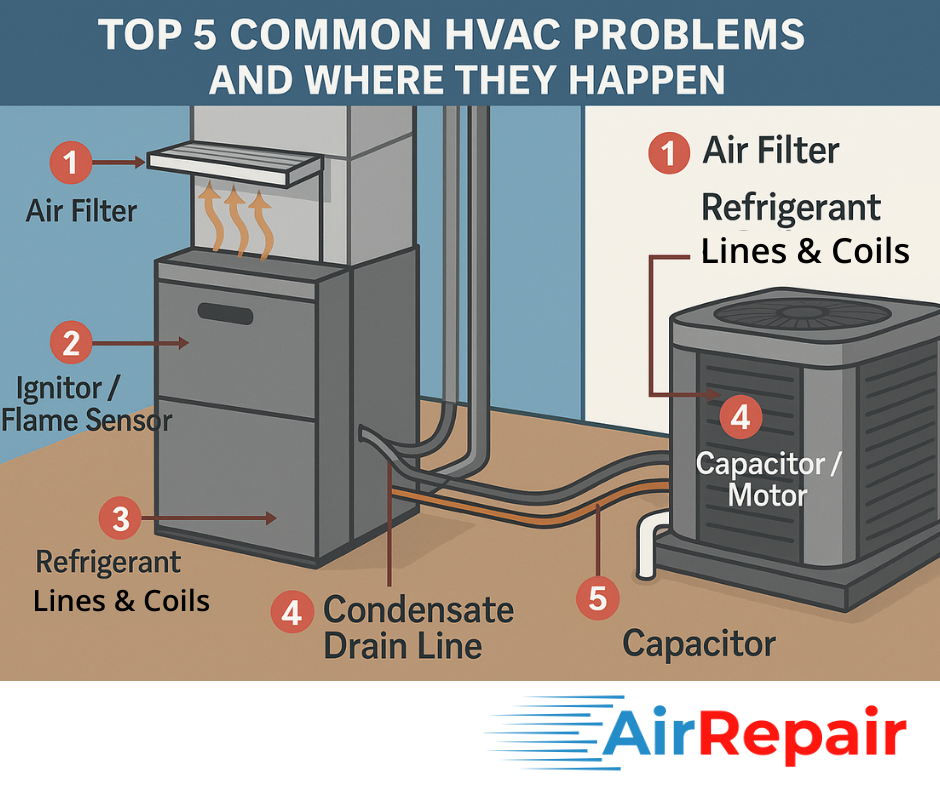
⚙️ The Top 5 HVAC Problems and What Homeowners Typically Notice


To make communication easier, let’s look at the five most common HVAC issues we see at AirRepair — and how they usually show up from a homeowner’s point of view.


1. Dirty or Clogged Air Filter

You’ll notice: Weak airflow, uneven temperatures, or the system running constantly.


What’s happening: A dirty filter restricts air movement, causing strain on the blower motor and reducing efficiency.


How to help: Check and replace filters every 1–3 months.


2. Faulty Ignitor or Flame Sensor (Heating Mode)

You’ll notice: Furnace clicks but doesn’t fully ignite, or heat stops suddenly.


What’s happening: Dust and carbon buildup interfere with ignition.


How to help: Note the sequence of sounds (“click, pause, no heat”) and tell your technician — that detail helps pinpoint ignition timing issues fast.


3. Low Refrigerant (Cooling Mode)

You’ll notice: Warm air blowing, ice on refrigerant lines, or longer cooling cycles.


What’s happening: Leaks cause low refrigerant pressure, making the system less effective.


How to help: Mention if you’ve seen ice buildup or heard “gurgling” sounds.


4. Faulty Capacitor or Motor

You’ll notice: System hums but doesn’t start, or fan stops mid-cycle.


What’s happening: The capacitor (a small electrical part) provides the startup boost — when it fails, motors struggle or stall.


How to help: Note if you hear humming but no movement — that’s key diagnostic info.


5. Drain Line Clog or Moisture Buildup

You’ll notice: Water pooling around the indoor unit, musty smells, or system shutting off unexpectedly.


What’s happening: Condensate drain lines clog with algae or debris, triggering safety shutoffs.


How to help: Share if you’ve seen standing water or if your thermostat flashes an error code.


📋 What to Have Ready When You Call an HVAC Company

When scheduling service, technicians typically ask for the following:


  1. Your contact info and service address
  2. System type (gas furnace, heat pump, or split system)
  3. Symptoms (noises, smells, airflow issues)
  4. Location of equipment (attic, basement, outdoor wall, etc.)
  5. System brand and approximate age (if known)
  6. Photos or videos (optional but helpful for describing noises or leaks)


Having this information ready helps us prepare parts, tools, and timing before we even arrive — saving you time, money, and ensuring the repair goes smoothly.


🧭 Bonus Tip: Keep a “System Notes” File

If you’ve ever had previous service, keep those notes handy! Record:


  • Last filter change
  • Date of last maintenance
  • Any repairs made
  • System age and model
  • Anything unusual you’ve noticed


This history helps technicians track patterns and catch issues before they become costly.


🤝 AirRepair’s Promise: Communication Goes Both Ways

At AirRepair, we know HVAC systems can be intimidating — that’s why we believe in transparent, two-way communication.


You’ll never get vague answers or pressure to replace a system that can still be repaired. Instead, we’ll explain:


  • What’s wrong in plain language
  • What caused it
  • What your options are — repair or replacement
  • What the cost and timeline look like


It’s how we’ve built trust with homeowners across Huntsville and Madison County: by treating every service call like a conversation, not a sales pitch.


💡 Final Thoughts: Speak Up, Stay Warm, and Save Money

Your HVAC technician doesn’t expect you to know the technical terms — but using a few descriptive words, noting smells or sounds, and having system details handy can make your service call faster, smoother, and more affordable.

Remember: good communication = better repairs.


Our Huntsville team specializes in repair-first service — no pressure, no sales push, just honest diagnostics and quick, effective solutions. Contact AirRepair for you heating and cooling needs.


Hearing a humming or clicking? Air won't work? Might be your capacitor...

Recent Posts

Spring HVAC Service
March 16, 2026
Spring HVAC maintenance in Huntsville, AL can save homeowners big money before summer heat arrives. Learn simple AC prep tips from AirRepair and schedule your spring tune-up today.
February 16, 2026
Selling your home in Huntsville? Learn why a $150 HVAC inspection from AirRepair can prevent buyer objections, protect your price, and help your home sell faster.
January 2, 2026
Frozen pipes can severely damage your Huntsville HVAC system, reducing its lifespan and efficiency. Learn warning signs, prevention tips, and why professional service from AirRepair protects your heating investment through North Alabama's coldest winters.

affordable HVAC maintenance plan
December 15, 2025
Give the gift of comfort this holiday season. Learn why affordable HVAC maintenance plans are the perfect gift for first-time homebuyers, a smart closing gift for realtors, and a powerful way to prevent costly repairs. Discover AirRepair’s repair-first philosophy and how it saves homeowners money.

November 10, 2025
When your furnace kicks on and starts making strange noises, don’t panic. Most fall heating issues are minor and fixable. Learn what those furnace sounds mean and when to call AirRepair in Huntsville, AL for expert, affordable help.
AirRepair
October 15, 2025
Discover if smart thermostats really save money for homeowners in Huntsville, Alabama. Learn how these devices work, their pros and cons, and whether they’re worth the investment.
September 30, 2025
HVAC tips for Northern Alabama homeowners: extend system life, cut costs, and avoid early replacement.
September 29, 2025
Learn why a Fall heating tune-up saves money, extends furnace life, improves safety, and prevents costly repairs. Call AirRepair in Huntsville today!
Broken AC system
September 23, 2025
Most HVAC issues can be fixed for $75–$300, not $12K+ for a new system. Learn the real truth about HVAC lifespans, repairs vs. replacements, and why Huntsville homeowners trust AirRepair to extend system life affordably.
August 1, 2025
Discover why TL Services is now AirRepair—same trusted local HVAC team, new repair-only focus. As equipment costs rise from inflation and tariffs, AirRepair helps Huntsville homeowners save thousands with affordable repairs instead of costly system replacements.