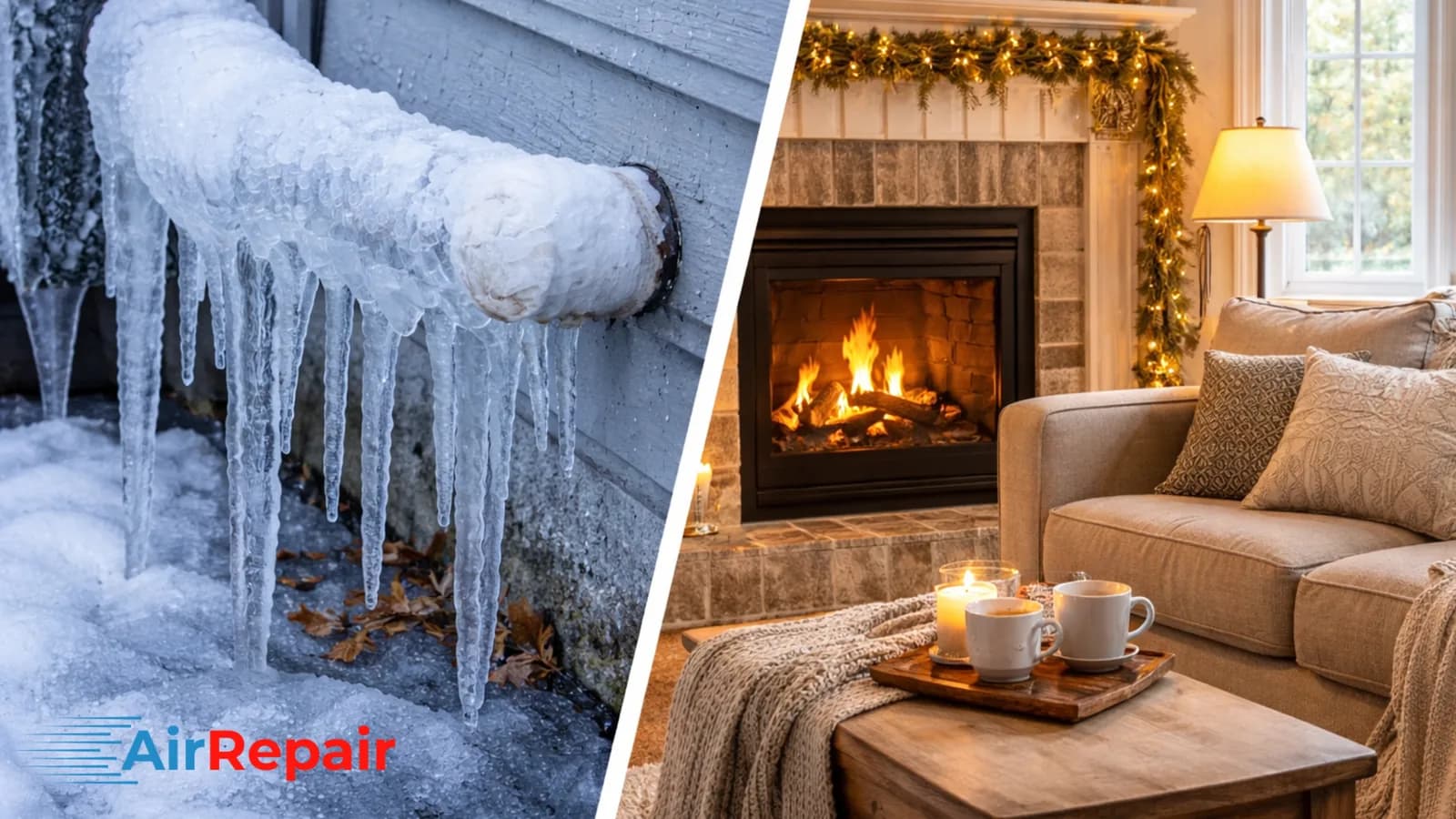
When Winter Strikes: How Frozen Pipes Can Silently Damage Your HVAC System

January 2, 2026

Share this article

Winter in Huntsville brings more than just chilly temperatures and the occasional snow flurry - it brings real risks to your home's heating system. While most homeowners worry about burst water pipes during a freeze, many don't realize that frozen pipes can wreak havoc on their HVAC system in ways that aren't immediately obvious. Understanding this connection could save you thousands of dollars in repairs and extend the life of your heating equipment.


The Hidden Connection Between Frozen Pipes and Your Heating System


When we talk about frozen pipes affecting your HVAC system, we're primarily discussing two critical components: the condensate drain line and, in some systems, refrigerant lines. Your heating system produces condensation as a natural byproduct of operation, and this moisture must drain away properly. During North Alabama's coldest nights, when temperatures drop below freezing, these drainage systems become vulnerable.


The condensate drain line carries moisture away from your furnace or heat pump. In modern high-efficiency systems, this condensation is constant and necessary for proper operation. When temperatures plummet, water sitting in these lines can freeze solid, creating blockages that prevent new condensation from draining. This seemingly minor issue triggers a cascade of problems that can compromise your entire heating system.


Heat pumps face additional challenges because they use refrigerant lines that run outside your home. While the refrigerant itself is designed to operate in cold conditions, the condensation that forms on these lines can freeze, and ice buildup on the outdoor unit can prevent proper heat exchange.


Why Frozen Pipes Target Your HVAC System


Several factors make HVAC-related pipes particularly susceptible to freezing. First, condensate drain lines often run through unheated spaces like attics, crawl spaces, or along exterior walls where insulation may be inadequate. These pipes typically carry water at room temperature or slightly cooler, making them prime candidates for freezing when ambient temperatures drop.


Poor installation practices compound the problem. Condensate lines that lack proper pitch or slope can allow water to pool in low spots. These standing water pockets freeze first and create ice dams that block the entire line. In older homes throughout Huntsville, original HVAC installations may not have accounted for our changing climate patterns and increasingly harsh winter conditions.


Additionally, many homeowners don't realize their condensate lines exist until there's a problem. Unlike the water supply pipes under your sink, these HVAC drainage lines work silently in the background - until they freeze and stop working entirely.


The Domino Effect: How Frozen Lines Damage Your Heating Unit


When a condensate line freezes, your heating system doesn't simply shut down-it begins a pattern of stress and malfunction that can permanently damage components. Here's what happens inside your system:


Immediate Backup and Overflow: As condensation continues to form with nowhere to drain, water backs up into the furnace or air handler. Modern systems have overflow sensors that trigger automatic shutdowns, but older units may not. Water accumulation leads to rust, corrosion of electrical components, and potential damage to the blower motor.


Excessive Cycling: Some systems will repeatedly attempt to start, fail due to safety sensors detecting the backup, and shut down again. This constant cycling stresses the ignition system, control boards, and blower motor. Each failed start attempt draws significant electrical current, creating heat and wear on components designed for smooth, sustained operation.


Pressure Imbalances: In heat pump systems, frozen refrigerant lines or blocked condensate drains create pressure differentials that force the compressor to work harder. The compressor is the heart of your heat pump-arguably the most expensive component to replace. When it operates under abnormal pressure conditions, its lifespan diminishes dramatically.


Secondary Freeze Damage: If your system shuts down completely due to a frozen condensate line, your home loses heat. This temperature drop can then cause your home's water supply lines to freeze, creating the traditional burst pipe scenario most homeowners dread.


Does It Impact Your Unit's Lifespan?


The short answer is yes-frozen pipes can significantly reduce your HVAC system's operational life. A well-maintained heating system in Huntsville should last 15 to 20 years for furnaces and 12 to 15 years for heat pumps. However, repeated freeze-related incidents can cut this timeline by 30 to 50 percent.


Each time water backs up into your system, it causes incremental damage. Rust and corrosion don't reverse-they accumulate. Circuit boards exposed to moisture may function afterward but develop intermittent problems over months or years. The blower motor bearings, when exposed to water, lose lubrication and begin wearing unevenly.


The compressor in heat pump systems is particularly vulnerable. These components operate on precision tolerances and balanced pressures. Operating under stress from frozen lines, even briefly, causes internal wear. While a single incident might not destroy your compressor, repeated stress over multiple winters creates cumulative damage that eventually leads to complete failure.


Winter-Proofing Your HVAC System: Prevention Strategies


Protecting your heating system from freeze damage requires both one-time preparations and ongoing vigilance throughout winter:


Insulate Vulnerable Lines: All condensate drain lines running through unheated spaces should have foam pipe insulation. This inexpensive material provides crucial protection during temperature drops. Pay special attention to lines in attics and crawl spaces.


Install Heat Tape: For particularly exposed sections of drain line, heat tape (also called heat cable) provides active protection. These electrical heating elements prevent freezing even in extreme cold. While they consume minimal electricity, their protection is invaluable.


Ensure Proper Drainage: Have an HVAC technician verify that your condensate lines have adequate slope for drainage. Standing water is your enemy. In some cases, adding a second drain line or repositioning the primary line may be necessary.


Seal Access Points: Cold air infiltration around HVAC components accelerates freezing. Seal gaps where refrigerant lines enter your home, ensuring conditioned air doesn't escape and cold air doesn't invade the space around your equipment.


Maintain Air Flow: Keep your outdoor heat pump unit clear of snow, ice, and debris. Adequate airflow prevents ice accumulation on the coils and ensures proper operation even in cold weather.


Install Freeze Protection Devices: Modern condensate pumps often include freeze protection sensors. If your system lacks this technology, aftermarket solutions are available. These devices either heat the line, alert you to freezing conditions, or both.


Recognizing the Warning Signs: See, Feel, Smell


Your HVAC system will communicate distress if frozen pipes are causing problems. Learning these signals helps you catch issues before major damage occurs:


What You'll See:

  • Ice formation on exterior refrigerant lines or around the outdoor unit
  • Water pooling around your indoor furnace or air handler
  • The condensate drain line covered in frost or ice
  • Visible water damage or staining on walls near HVAC equipment
  • Your thermostat failing to maintain set temperatures despite running continuously


What You'll Feel:

  • Reduced airflow from your vents, indicating the blower may be struggling
  • Rooms that won't warm up despite the system running
  • Unusual vibrations or movement in the air handler when the system operates
  • Cold spots near vents that should be delivering warm air


What You'll Smell:

  • A musty or mildewy odor indicating water accumulation and potential mold growth
  • Burning smells from electrical components stressed by repeated cycling or water exposure
  • Metallic scents that may indicate rust or corrosion developing inside your system


If you notice any combination of these symptoms during freezing weather, shut down your system immediately and contact a professional HVAC technician.


Professional Response: What Your HVAC Technician Should Do


When you call for service after a freeze event, a qualified HVAC technician should perform a comprehensive assessment rather than simply clearing the frozen line. Here's what professional service includes:


Immediate Assessment: The technician will first safely thaw the frozen condensate line using controlled methods-never torches or excessive heat that could damage pipes. They'll verify water flow restoration and check for cracks or damage caused by ice expansion.


System Inspection: A thorough inspection examines all components potentially affected by the freeze. This includes checking the blower motor for water damage, inspecting electrical connections and control boards for moisture exposure, and verifying the drain pan hasn't cracked or rusted.


Compressor Evaluation: For heat pump systems, the technician should check compressor operation and refrigerant pressures to ensure no damage occurred from abnormal operating conditions.


Prevention Installation: Based on findings, your technician should recommend and install appropriate prevention measures: insulation, heat tape, improved drainage, or system modifications to prevent recurrence.


Documentation: A professional service call includes documentation of what was found, what was repaired, and recommendations for preventing future issues. This record becomes valuable for warranty claims and future service needs.


The Cost of Inaction


Ignoring frozen pipe issues or delaying professional service creates escalating costs. A service call to address a frozen condensate line might cost $150 to $300. Delaying that call could lead to a water-damaged blower motor replacement at $400 to $1,500, or worse-a failed compressor requiring $1,500 to $3,000 in repairs, potentially more than the value of older systems.


Beyond direct repair costs, a damaged HVAC system loses efficiency. A struggling heating system might consume 20 to 40 percent more energy while delivering less comfort. Over a single winter, this inefficiency can cost hundreds in unnecessary utility bills.


Protect Your Investment This Winter


Your HVAC system represents one of your home's most significant investments. In Huntsville's unpredictable winter weather, protecting that investment means understanding the relationship between frozen pipes and heating system health. Whether you're a homeowner wanting to maintain your family's comfort or a property manager responsible for multiple units, prevention and quick response to freeze-related issues will save money and extend equipment life.


Don't wait until you're facing a heating emergency during the coldest night of the year. Take action now to winterize your HVAC system, and at the first sign of freeze-related problems, contact professionals who understand both the immediate issue and long-term implications.


Keep Your Heating System Running Strong All Winter Long


AirRepair understands Huntsville's unique winter challenges and how they affect your HVAC system. Our experienced technicians provide comprehensive freeze protection services, emergency repairs, and preventive maintenance that keeps your heating system healthy through every cold snap. We're a local, family-owned business that treats your home with the same care we'd give our own.


Don't let frozen pipes damage your valuable heating equipment. Call AirRepair today at 256-508-5807 or visit myair.repair to schedule your winter HVAC protection service. We'll ensure your system is prepared for whatever winter weather North Alabama brings your way.


Recent Posts

affordable HVAC maintenance plan
December 15, 2025
Give the gift of comfort this holiday season. Learn why affordable HVAC maintenance plans are the perfect gift for first-time homebuyers, a smart closing gift for realtors, and a powerful way to prevent costly repairs. Discover AirRepair’s repair-first philosophy and how it saves homeowners money.
November 10, 2025
When your furnace kicks on and starts making strange noises, don’t panic. Most fall heating issues are minor and fixable. Learn what those furnace sounds mean and when to call AirRepair in Huntsville, AL for expert, affordable help.
How to describe the issue to your HVAC technician
November 3, 2025
Not sure how to describe what’s wrong with your HVAC system? Learn how to communicate issues clearly with your technician, understand common HVAC problems, and use descriptive language that speeds up diagnosis. Brought to you by AirRepair, Huntsville’s repair-first experts.
AirRepair
October 15, 2025
Discover if smart thermostats really save money for homeowners in Huntsville, Alabama. Learn how these devices work, their pros and cons, and whether they’re worth the investment.
September 30, 2025
HVAC tips for Northern Alabama homeowners: extend system life, cut costs, and avoid early replacement.
September 29, 2025
Learn why a Fall heating tune-up saves money, extends furnace life, improves safety, and prevents costly repairs. Call AirRepair in Huntsville today!
Broken AC system
September 23, 2025
Most HVAC issues can be fixed for $75–$300, not $12K+ for a new system. Learn the real truth about HVAC lifespans, repairs vs. replacements, and why Huntsville homeowners trust AirRepair to extend system life affordably.
August 1, 2025
Discover why TL Services is now AirRepair—same trusted local HVAC team, new repair-only focus. As equipment costs rise from inflation and tariffs, AirRepair helps Huntsville homeowners save thousands with affordable repairs instead of costly system replacements.