Why Is My Heat Pump Blowing Cold Air? Defrost Mode, Aux Heat & When to Actually Call
A blunt Huntsville homeowner’s guide to what is normal in the first cold snaps — and what is not.
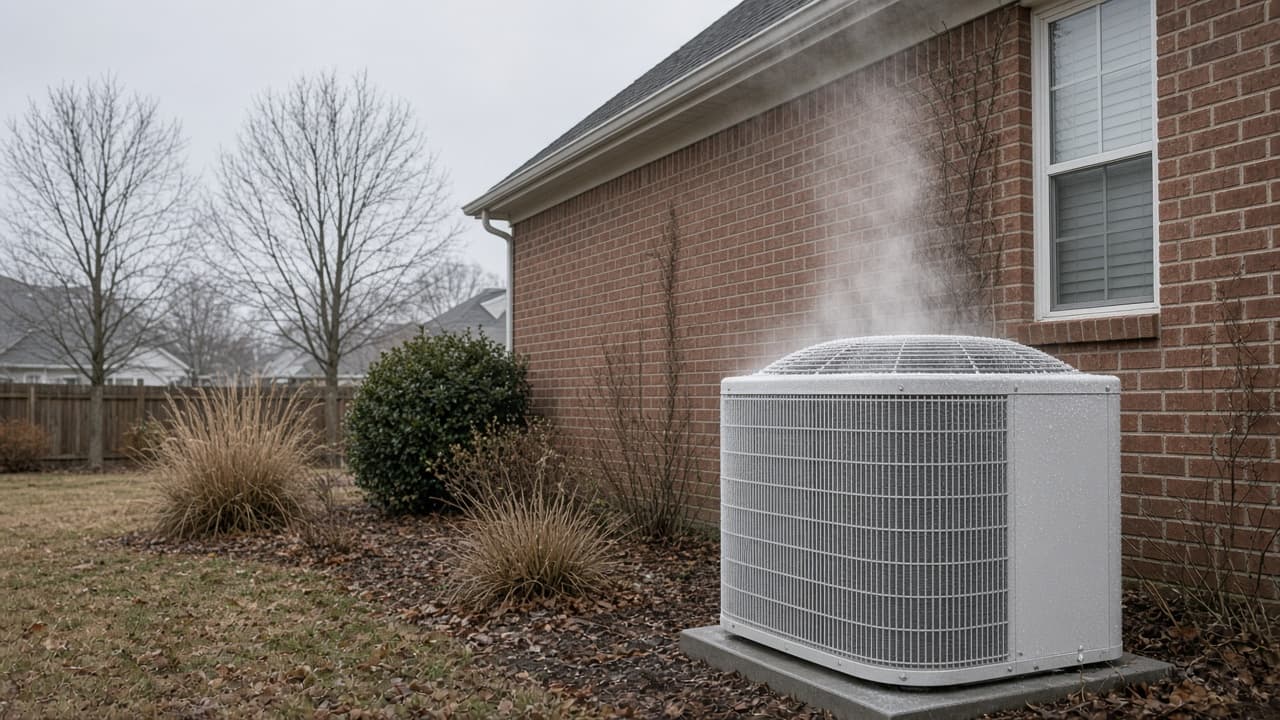
The first night that dips into the 30s in Huntsville, the Facebook groups light up: “Heat pump blowing cold air — do I need a new system?” Sometimes the answer is a real failure. A lot of the time, the system is doing something ordinary that nobody explained at install: defrost mode, a short burst of cooler supply air, or auxiliary heat kicking on while the outdoor unit works through frost.
AirRepair exists to fix problems — not to scare you into a replacement. This post separates normal cold-weather behavior from the warnings that deserve a service call.
Key Takeaways
- Heat pumps can briefly blow cooler air during defrost cycles; that alone is not a reason to replace the system.
- Watch for the AUX / EM heat indicators and understand what they mean for comfort and power bills.
- Ice on the outdoor unit can be normal during defrost; a solid block of ice that never clears is not.
- Real red flags: no heat, breaker trips, burning smells, screaming bearings, or rooms that never recover.
- Most heat pump issues are repairs — not automatic change-outs. Get a diagnosis before you shop systems.
How a Heat Pump Heats (In One Paragraph)
In heating mode, a heat pump moves heat from outside air into your house. Even cold outdoor air still contains heat energy the system can extract. When outdoor coils frost up — common in Alabama’s damp cold — the system periodically reverses to melt that frost. That is defrost mode. During defrost, indoor air can feel cooler for a few minutes, and steam may rise off the outdoor unit. That looks dramatic in a dark yard. It is often normal.
Defrost Mode: What You Should Feel and See
Typical signs of a normal defrost:
- Outdoor unit stops looking like a frozen brick and starts shedding ice or showing steam
- Indoor supply air feels less warm for a short period
- The system returns to warmer supply air afterward
- Cycles last minutes, not all evening
Not normal:
- Outdoor unit encased in ice that never melts through repeated cycles
- Continuous cool air for 20–30+ minutes with no recovery
- Water leaking into the home from mismatched drain behavior
- Loud grinding or repeated hard starts every few minutes
If you only notice a brief cool spell on damp 35°F evenings and then the house recovers, you may be meeting defrost for the first time — not discovering a dead system.
AUX Heat and EM Heat: The Lights People Panic Over
Many thermostats show AUX (auxiliary) heat when electric heat strips (or another backup source) help the heat pump. That can happen on colder mornings or during defrost support. EM (emergency) heat usually means the thermostat is set to run backup heat only — which you might choose during a known heat pump failure, and which you should not leave on by accident all winter.
What to do:
- If AUX appears briefly on the coldest mornings and comfort is fine, note it and monitor your bill.
- If EM is on and you did not select it, check the thermostat mode.
- If AUX/EM runs constantly while the outdoor unit sits quiet, call for diagnosis — you may be heating with strips alone.
Strip heat works. It is also expensive to run as your only heat source in a North Alabama winter.
Cold Air at the Register vs. Cold House
These are different complaints.
Cool-ish air at the vent while the house stays comfortable can happen with heat pumps because supply temperatures are often lower than what people remember from gas furnaces. Heat pumps frequently deliver air that feels “room temperature plus” rather than “blast furnace.” If your old mental model is gas heat, heat pump supply air can feel wrong even when it is doing its job.
House temperature falling despite continuous runtime is a performance problem. Causes can include low refrigerant, failing outdoor fan, failing compressor, dirty filters, blocked outdoor coil, failing reversing valve, thermostat issues, duct leaks in a vented attic, or a system undersized for an addition nobody updated.
Change the filter first. Confirm vents are open. Then call if the house still cannot hold setpoint.
When to Call — and What a Honest Tech Should Do
Call sooner if you notice:
- No heating capacity / rapidly dropping indoor temperature
- Breaker trips when the unit starts
- Burning smell, smoke, or scorched electrical odor
- Ice that never clears on the outdoor coil
- Loud metal-on-metal sounds
- Water where water should not be
- Thermostat errors you cannot clear
A repair-first visit should include questions, measurements, and a clear finding — not a jump to “these are old, here’s a quote for a new system.” AirRepair’s whole brand exists because too many Huntsville homeowners get replacement pitches for problems that are a few hundred dollars in parts and labor. We have said that in earlier posts about not getting talked into a new system and about repair pricing transparency. This article is specifically about cold-air heat pump behavior in the first cold snaps.
Local Section: Huntsville’s First Cold Snaps and Shoulder-Season Confusion
Northern Alabama winters are inconsistent. You can have a 70°F afternoon and a freezing night in the same week. Heat pumps that ran almost entirely in cooling mode since April suddenly reverse, defrost, and call for AUX. That shoulder-season confusion creates a spike in “it’s broken” calls every November.
Homes from South Huntsville to Madison with heat pumps in attics also fight duct losses on the coldest mornings. Before you approve a system replacement, ask whether static pressure, duct leakage, or a simple outdoor fan motor is the real villain. Replacing a condenser does not fix attic ducts.
A Homeowner Checklist Before You Panic
- Check the thermostat mode (Heat, not Emergency Heat by accident).
- Replace a dirty filter.
- Look outside during a cool-air episode — is the unit frosting/defrosting?
- Give a short defrost cycle a few minutes to finish.
- Note whether the house temperature is actually falling.
- Write down any AUX/EM indicators and odd noises with timestamps.
- Then call with that information — you will get a faster, cheaper diagnosis.
What “Blowing Cold” Can Cost — Without Guessing Your Invoice
AirRepair publishes repair-minded pricing guidance elsewhere because homeowners deserve ranges, not mystery. Exact cost depends on the failed part: capacitor, contactor, outdoor fan motor, defrost control, sensors, TXV/thermostatic issues, refrigerant leak repair, or thermostat replacement are different jobs. The point is process: diagnose, explain, repair when repair is smart, replace when the math truly says so. If a company quotes a full system before measuring anything, get a second opinion.
Also remember: a “free estimate” that only estimates replacement is not a diagnosis.
Fix the Problem — Don’t Shop for Fear
Cold air from a heat pump is a symptom, not an automatic death sentence for the system. Figure out which symptom you have.
Call AirRepair at (256) 508-5807 for a repair-first diagnosis in the Huntsville area. We will tell you what is wrong, what it costs to fix, and when replacement actually makes sense — without the scare tactics.